Challenge: Reimagining neural networks through biological inspiration
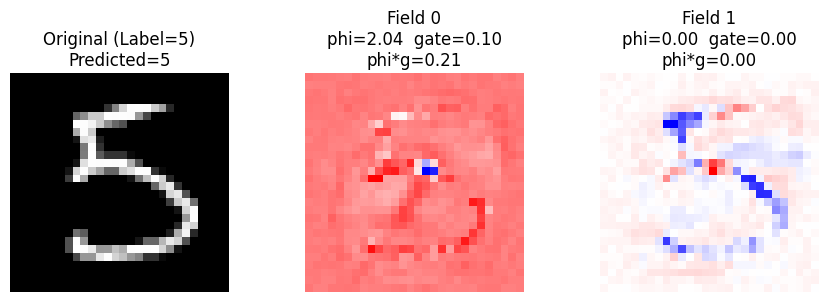
Traditional artificial neural networks are primarily based on synaptic connections, where information flows directly from one neuron to another. However, biological neural systems use multiple communication mechanisms. One such mechanism is ephaptic coupling, where neurons communicate through local electric fields rather than direct connections.
The challenge was to create a novel neural network architecture that incorporates this alternative communication mechanism, potentially unlocking new computational capabilities and interpretability not found in standard neural networks. By modeling the way neural fibers influence each other through electric fields, could we build networks with different inductive biases and more transparent information processing?