Challenge: Analyzing EEG signals for motion imagery detection
When developing an AI that could detect motion imagery from EEG data—with the ultimate goal of controlling a virtual character through thought alone—I encountered significant challenges with conventional neural network approaches. The difficulty stemmed from the inherent nature of EEG signals, which contain crucial information in both time and frequency domains.
Traditional approaches were insufficient for several reasons:
- Time-domain analysis alone missed critical frequency patterns in the neural signals
- Pure frequency-domain methods (like Fourier transforms) lost temporal information essential for detecting motion imagery
- Existing public EEG datasets lacked diversity in movement types needed for training robust models
- Individual variation in EEG patterns required flexible, adaptive filtering approaches rather than fixed filter banks
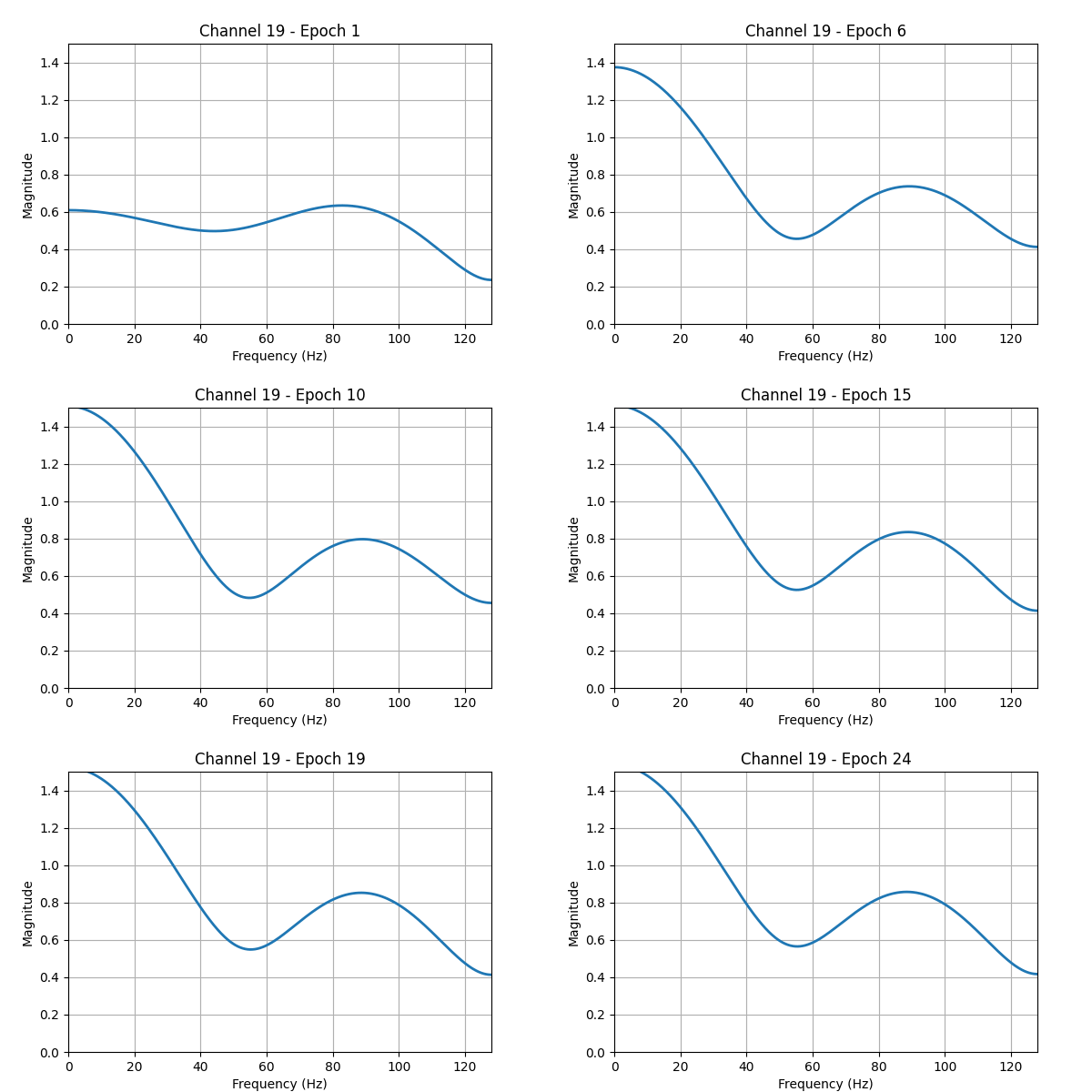
I needed an approach that could adaptively analyze both the spectral and temporal characteristics of EEG signals, learning directly from the data which frequencies and timing patterns were most informative for distinguishing different imagined movements.